

Muscle Memory
… it will not only take the strength of many to carry this great weight forward, but the skill and endurance that can only come from consistent and integrative practice.

This sermon was originally delivered at Unitarian Universalist Fellowship of Mankato, MN on Sunday, February 8th, 2026.
Many of us who are living in this occupied territory are in a constant state of hypervigilance, prepared for—or at the very least aware of the possibility that anything might happen at any time. For some, this is an all too familiar way of being. If we live in marginalized and subjugated bodies, we are already trained to anticipate danger awaits us around every corner. For others, this full-time effort is entirely new, and protecting our bodies, minds, and hearts—and those of our neighbors—with this degree of effort has brought us to exhaustion like we’ve never known before.
Those just beginning to engage in resistance work at this level might feel the need to get up and get moving quickly to make up for lost time. There is great urgency before us, to be sure. And today’s urgency is in many ways the result of yesterday’s dragged feet. But to suddenly move at maximum speed and effort in ways we’ve never moved before comes with incredible risk of harm—to ourselves and to others—and with only a very slim margin of success. We simply cannot sustain this movement on adrenaline and instinct alone. And we don’t need to. There are so many people who have been moving in these ways for so long, and who have already been through the trial and error of determining best practices for consistent and sustainable resilience.
When we first learn a new movement—as in a dance, or an exercise, or a pose—our bodies and brains move consciously through the movement one slow step at a time. Signals fire from our brains to the nerves in our muscles, telling our bodies when and how to move. And when those neural pathways are first being formed, the movement that follows is usually pretty uncomfortable, physically or emotionally, perhaps even embarrassing. We are likely to fall or fail in any number of ways. It is here we face a critical impasse: will we keep showing up and working through this discomfort for the sake of achieving proficiency?
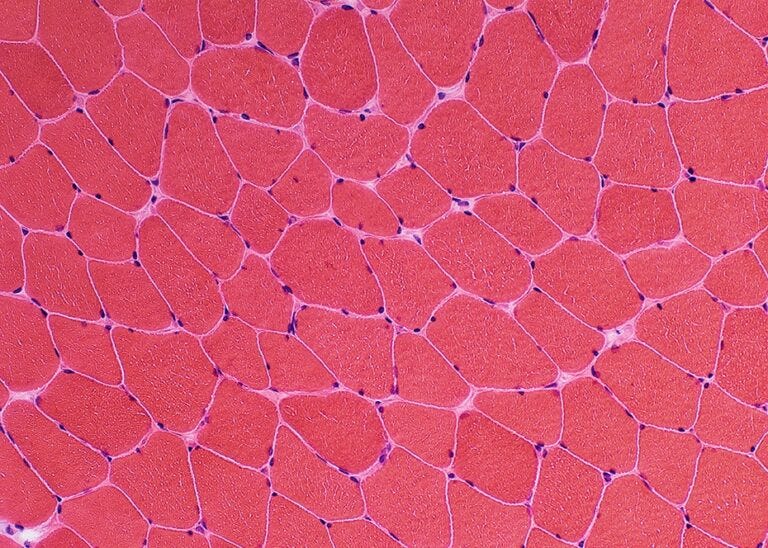
Sometimes, for any number of reasons, the answer will be no. But if we do have the will to try again, whether in response to the discomfort or in spite of it, the repetition of the movement will immediately begin fortifying its pathways. Every time we repeat the movement, those same nerve and motor circuits fire again, the connections get stronger, and over time the signals start firing faster and more efficiently. Our bodies begin adapting too as our muscle fibers get stronger, our coordination improves, and with enough time and practice we may establish a muscle memory so deep that it can never be forgotten. Even after years without practice, the existing neural pathways will fire right back up once they’re started. Like riding a bike, as they say.
Now, even though we may bring a deeply ingrained knowledge of how to move in this way, if some time has passed since we last put that knowledge to use, we may have lost the strength or stamina necessary to perform at a high volume. I may have perfected my deadlifting form, but if I haven’t deadlifted in years I probably can’t lift a heavy weight or high number of reps on my very first set without risking injury. I may or may not be speaking from personal experience here.
And even if we do have both the muscle memory and the current training necessary for high volume or high intensity movement, everyone knows that working out without stretching and warming up first puts you at risk of preventable injury and subsequent damage. It is amazing how much our bodies are capable of enduring while still remaining so vulnerable to harm.
Then sometimes we learn a certain movement, and the neural pathways of that movement are fully formed within our muscle memory, only for us to realize we’ve been doing it wrong this entire time. Our form is off, we’re out of alignment, we’re putting too much weight on the wrong joints or muscle groups. So now we not only have the arduous and awkward task of learning a new movement, but we also have to concede to the fact that we have been doing it wrong all this time. We are now faced with the added effort of both learning and unlearning at the same time.
We cannot shift a culture—or, greater yet, liberate a world—in one single sweeping motion. We who live in this time and place have been encumbered with a very heavy weight that will need to be carried for a very long time. And many of us are using muscles we have never used before. So it will take not only the strength of many to carry this great weight forward, but the skill and endurance that can only come from consistent and integrative practice.
This practice is made up of small, consistent, and repetitive acts of resistance, solidarity, education, and care. Daily motions. Repeated lifts. Shifting power. Persistent awareness. Gentle corrections. And the will to return again and again, despite the discomfort. To stay committed to our movement despite the many looming temptations to abandon it.
In episodes of high stress, any one of us is liable to revert back to old postures. Even when we are deep in practice, that old muscle memory lives on just waiting to be re-activated. We are always liable to default to positions of fear, avoidance, control, ego, shame, supremacy. The best we can do in these inevitable moments is recognize that old posture when it’s re-emerging and take a moment to check in and correct it. But the worst we can do is ignore it completely and lose all that valuable time and energy we have put toward training ourselves out of it.
Though we may sit with shame that these movements are not yet familiar to us, if we hope to avoid serious injury, we cannot rush our way through them. As activist writer adrienne maree brown would say, we must move at the speed of trust, which she admits is nearly synonymous with moving at the speed of love. We must first see if we can hold the weight before we should attempt to carry it. We must first check that we can maintain our balance before doing away with the bolster. We must first know our neighbor—or be known as a neighbor—before offering our precious cups of flour.
And when we do move too fast or with overcalculated confidence, as we are almost sure to do, and we end up falling or dropping the weight—maybe even on our own toes, or someone else’s—we can choose to either acknowledge and learn from our mistake and repair the resulting harm, or to get lost in our shame and abandon our practice entirely.
Alongside this training practice must come a parallel practice of discernment and learning to hear what our bodies want to tell us. What is the difference between pain and discomfort? How do we know the difference between stretching and pulling, or even tearing? How do our bodies tell us the difference? How do we know which sensations are telling us to stop and which sensations are telling us to dig deeper?
And, of course, all good training includes rest and recovery. But our rest time, too, must be right-sized. An indefinite rest period is no different from an abandoned practice. As we allow ourselves the necessary time to recover, as our muscles stabilize and build, we must also be ready to show up again tomorrow, even if we’re still a little sore.
We must approach this movement—and this moment—with grace and humility, knowing it is much more than just an exercise. Our lives and the lives of our neighbors are very much at stake. We are piling together our own resources and developing our own processes for keeping people housed and fed. It is increasingly clear that no one is coming to save us except us. We are not just training for a single event but the survival and liberation of our people.
The weight, and the gravity, are heavy. We will stumble. We will fall. We will use improper form. We will try to carry more than we can manage. We will inadvertently hurt ourselves and others.
But over time, the more we practice—particularly in the company of experienced coaches and attentive spotters—the signals will begin to fire faster. Our capacities will increase, our coordination will improve. Cooperation and communication will get easier and easier. Our new reflexes will get stronger as our old ones get weaker.
And not just as individuals, but as a collective whole. As one people, one body, one shared nervous system.
Let’s keep practicing together every day until what feels impossible becomes second-nature.
May it be so.
Amen.